
Evidence for Iron Age or Roman warfare?
Analysis has revealed evidence for traumatic injuries caused by a large-bladed implement
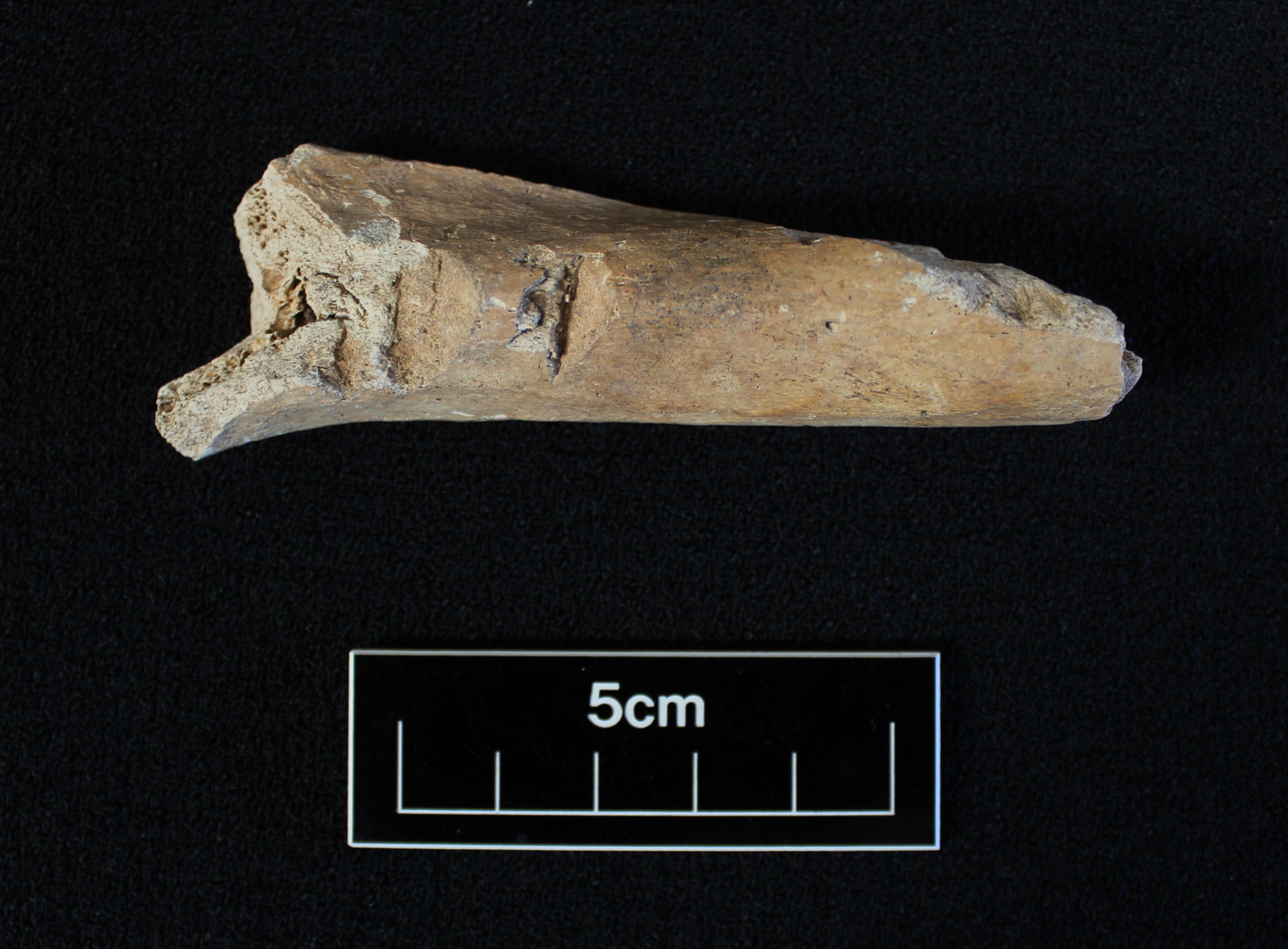
During post-excavation analysis of material from an archaeological site in Northamptonshire, AS' osteoarchaeologist, Julia Cussans, identified a piece of human humerus bearing two large chops on one side and a cut on the other. The bone was disarticulated and found within a pit which has been dated to the late Iron Age or Romano-British period. The marks on the bone appear to result from traumatic injuries inflicted by a large-bladed instrument such as a sword or axe. There does not appear to be any healing of the bone at the site of the wound and so the individual affected is likely to have died shortly after the wound was inflicted, or perhaps as a result of the wounds that they suffered. The bone appears to have been redeposited in the pit and no further remains from this person were identified; it was discovered alongside a small amount of pottery and animal bone
Latest News
Remains of extinct prehistoric cattle found in Cambridgeshire
Neolithic Arrowheads from sites in Suffolk and Hertfordshire
Evidence for Iron Age or Roman warfare?
Feedback from former employees
Employment Opportunities
AS regularly recruits field staff and we would be pleased to receive CVs so that we may email out details of our field vacancies. Please email your CV to: This email address is being protected from spambots. You need JavaScript enabled to view it.